


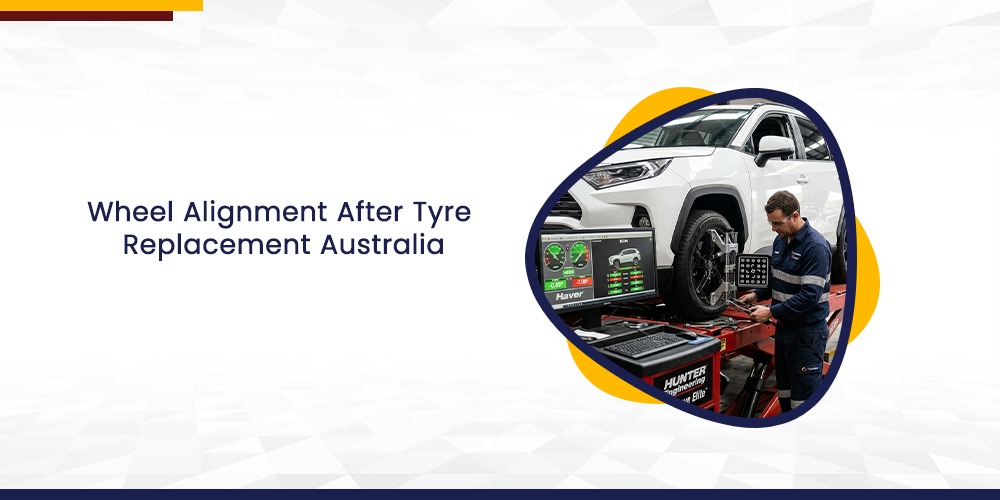
Replacing tyres is a routine part of
vehicle maintenance, yet many drivers overlook one related factor that directly
affects how new tyres perform: wheel alignment. Tyres are designed to meet the
road at specific angles. When those angles are incorrect, tyres do not wear
evenly and vehicle behaviour changes gradually.
In Australia, where vehicles are driven
across suburban streets, highways, and mixed-use roads, wheel alignment plays a
critical role in tyre life, handling consistency, and replacement planning.
This blog explains why wheel alignment matters after replacing tyres, how
misalignment develops, and what drivers should understand to protect new tyres.
Understanding What Wheel Alignment
Controls
Wheel alignment refers to the angle and
direction at which tyres contact the road surface. These angles are set by the
vehicle manufacturer to ensure predictable handling, braking stability, and
even tyre wear.
Alignment influences:
- How tyres meet the road
- How weight is distributed across the tread
- How the vehicle tracks in a straight line
- How steering responds during turns and braking
When tyres are replaced without checking
alignment, existing alignment issues often transfer directly to the new tyres.
Why Alignment Becomes an Issue Over Time
Wheel alignment does not remain fixed
permanently. Australian driving conditions expose vehicles to forces that
gradually alter alignment settings.
Common contributors include:
- Potholes and uneven road surfaces
- Kerb contact during parking
- Speed humps and driveway entries
- Suspension component wear
In suburban and industrial areas such as
Noble Park, Sunshine West, and Lynbrook, vehicles frequently encounter road
repairs and heavy traffic that increase alignment deviation over time.
How Misalignment Affects New Tyres
New tyres provide uniform tread depth and
structure. When installed on a vehicle with misalignment, wear begins unevenly
almost immediately.
Misalignment can cause:
- Inner or outer edge wear
- Feathered tread patterns
- Reduced tread life
- Handling inconsistency
These wear patterns reduce the service life
of new tyres even if tyre selection and pressure are correct.
Alignment checks during tyre replacement
are performed at Evertyres stores when required.
Alignment and Steering Behaviour
Wheel alignment directly affects steering
behaviour. Even small alignment deviations can change how the steering wheel
responds.
Drivers may notice:
- Vehicle pulling to one side
- Steering wheel not returning to centre
- Steering wheel sitting off-centre when driving straight
These changes often appear gradually and
may not be obvious immediately after tyre replacement. Over time, they
contribute to uneven wear and increased driver correction.
Alignment and Braking Stability
During braking, vehicle weight transfers
forward. Tyres must maintain even contact with the road to ensure predictable
braking behaviour.
Misaligned wheels affect braking by:
- Reducing even contact across the tread
- Increasing tyre scrub during braking
- Causing directional instability under braking load
Drivers may notice the vehicle drifting
during braking or requiring additional steering correction.
Tyre inspection and alignment assessment
form part of routine tyre services during replacement and maintenance.
Relationship Between Alignment and Tyre
Pressure
Tyre pressure and alignment work together.
Even correctly inflated tyres will wear unevenly if alignment is incorrect.
Alignment issues can:
- Mimic pressure-related wear patterns
- Accelerate wear on specific tread areas
- Reduce the effectiveness of pressure adjustments
For this reason, pressure correction alone
cannot resolve uneven wear caused by misalignment.
Common Alignment Wear Patterns
Understanding wear patterns helps drivers
recognise alignment issues early.
Common patterns include:
- Inner edge wear indicating toe or camber deviation
- Outer edge wear from alignment imbalance
- Feathering caused by incorrect toe angle
Early identification of these patterns
allows alignment correction before tyres require replacement.
Wear inspection is included during tyre
checks at Evertyres stores.
Alignment and Fuel Consumption
Misaligned wheels increase rolling
resistance. When tyres scrub against the road rather than rolling freely,
additional energy is required to maintain speed.
This results in:
- Increased fuel usage
- Faster tyre wear
- Reduced efficiency over time
Alignment correction helps reduce
unnecessary resistance and supports predictable fuel usage.
Alignment and Suspension Components
Wheel alignment is linked to suspension
condition. Worn suspension components can prevent alignment from remaining
within specification.
Common suspension-related influences
include:
- Worn bushings
- Ball joint wear
- Shock absorber degradation
During tyre replacement, technicians assess
whether alignment can be set correctly or whether suspension condition should
be addressed first.
This assessment forms part of tyre services
at Evertyres locations.
When Alignment Should Be Checked
Alignment should be checked:
- After replacing tyres
- After noticeable impact with potholes or kerbs
- When uneven tyre wear is observed
- When steering behaviour changes
Checking alignment at the time of tyre
replacement helps protect new tyres from early wear.
Alignment assessment is available through
Evertyres stores.
Replacing Tyres Without Alignment: Cost
Implications
Replacing tyres without checking alignment
may appear cost-effective initially but often results in shorter replacement
intervals.
Cost impacts include:
- Reduced tyre lifespan
- More frequent replacements
- Increased fuel usage
- Additional maintenance visits
Correcting alignment during tyre
replacement supports planned maintenance and predictable tyre life.
Alignment and Different Vehicle Types
Different vehicles respond differently to
alignment deviation.
Examples include:
- Passenger vehicles showing rapid edge wear
- SUVs experiencing steering drift due to weight and ride height
- Vans and commercial vehicles wearing tyres unevenly under load
Tyres suited to different vehicle types can
be reviewed through the Evertyres inventory
prior to replacement.
Online Research Before Booking Alignment
Many drivers search online after noticing
uneven tyre wear or steering changes. Reviewing service options before visiting
a store helps reduce delays.
Evertyres provides tools that allow drivers
to:
How Alignment Protects New Tyres
New tyres represent a significant
maintenance investment. Aligning wheels after replacement ensures tyres wear
evenly from the start.
Alignment helps:
- Maintain consistent tread contact
- Support predictable handling
- Extend replacement intervals
Drivers who align wheels after tyre
replacement reduce the risk of early wear.
Alignment Checks and Ongoing Maintenance
Alignment should not be viewed as a
one-time service. Changes in road conditions and vehicle use can affect
alignment over time.
Periodic inspection during tyre maintenance
helps ensure alignment remains within specification.
Maintenance support is available through
Evertyres services.
Conclusion
Wheel alignment plays a direct role in tyre
life, handling consistency, braking stability, and fuel usage. Replacing tyres
without checking alignment increases the risk of uneven wear and early
replacement.
Australian driving conditions increase
alignment deviation over time, making alignment assessment an important part of
tyre replacement planning. Drivers who address alignment at the time of tyre
replacement protect new tyres and maintain predictable vehicle behaviour.