


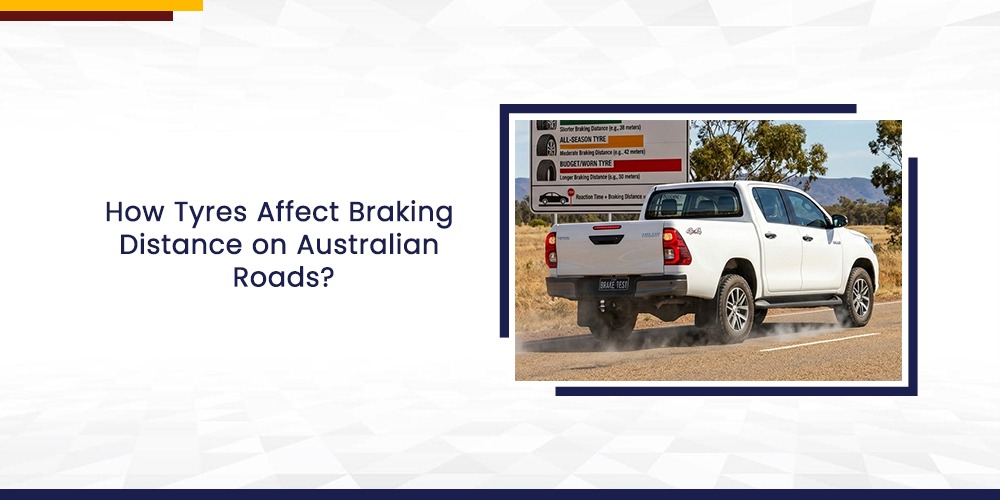
Braking distance is not determined by the
braking system alone. While brakes apply force to slow a vehicle, tyres
determine how effectively that force is transferred to the road surface. Every
braking event relies on the tyre’s ability to maintain traction under load,
temperature, and surface variation.
In Australia, braking performance is
influenced by road surface conditions, weather patterns, vehicle usage, and
tyre maintenance. This blog explains how tyres affect braking distance, how
braking performance changes as tyres wear, and what Australian drivers should
understand to maintain predictable stopping behaviour.
Understanding the Relationship Between
Tyres and Braking
When a driver applies the brakes, weight
transfers forward and increases load on the front tyres. These tyres must
maintain contact with the road while converting motion into friction. If tyre
grip is reduced, braking distance increases regardless of brake condition.
Tyres influence braking through:
- Tread depth and pattern
- Rubber compound behaviour
- Inflation pressure
- Contact area with the road
- Temperature stability
Any reduction in these factors limits
braking efficiency.
Australian Road Conditions and Braking
Demands
Australian roads present varied braking
challenges. Suburban driving involves frequent stops at intersections and
traffic signals. Highway driving requires stable braking at higher speeds.
Industrial and mixed-use areas often introduce uneven surfaces and debris.
Drivers in areas such as Noble Park,
Sunshine West, and Lynbrook frequently encounter:
- Stop-start traffic
- Variable road repairs
- Mixed passenger and commercial vehicles
These conditions increase reliance on tyre
grip and consistent braking response.
Tread Depth and Its Role in Braking
Distance
Tread depth affects how tyres interact with
the road surface, particularly during braking. Deeper tread allows tyres to
maintain consistent contact and disperse water effectively.
As tread wears:
- Dry braking grip reduces gradually
- Wet braking grip reduces more noticeably
- Water evacuation becomes less effective
Australian regulations require a minimum
tread depth of 1.5 mm, but braking performance often reduces well before this
limit is reached.
Tread depth checks form part of routine
tyre services
carried out during inspection and replacement.
Wet Roads and Water Dispersion
Wet road conditions significantly increase
braking distance. When water builds between the tyre and road, braking force is
reduced until tread channels clear the water.
As tyres wear:
- Water dispersion efficiency decreases
- Braking response becomes less predictable
- Stopping distance increases
This effect is more noticeable during
seasonal rainfall or on roads with poor drainage.
Regular tread inspection during tyre services
helps identify when wet braking performance may be compromised.
Tyre Pressure and Braking Consistency
Inflation pressure determines how much of
the tyre contacts the road during braking.
Incorrect pressure affects braking in
different ways:
- Underinflation increases tyre deformation and reduces braking
stability
- Overinflation reduces contact area and grip
Pressure also changes with temperature.
Australian road surfaces can raise tyre pressure during driving, while
overnight cooling reduces pressure.
Pressure checks and adjustments are
included during routine tyre services at Evertyres locations.
Load Transfer During Braking
During braking, vehicle weight shifts
forward. This increases load on the front tyres and reduces load on the rear
tyres. Tyres must be able to manage this change without losing traction.
Factors affecting load transfer include:
- Vehicle weight
- Suspension condition
- Tyre condition
Tyres with uneven wear or incorrect
pressure respond less predictably to load transfer, increasing stopping
distance.
Effect of Tyre Wear Patterns on Braking
Uneven tyre wear reduces braking
efficiency. Tyres that wear unevenly do not maintain uniform contact with the
road during braking.
Common wear patterns that affect braking
include:
- Shoulder wear from underinflation
- Centre wear from overinflation
- One-side wear from alignment issues
Identifying wear patterns early helps
prevent braking performance loss. Wear inspection is included during tyre
checks at Evertyres stores.
Wheel Alignment and Braking Control
Wheel alignment affects how tyres meet the
road during braking. Misaligned wheels cause tyres to scrub or drag, reducing
effective grip.
Signs alignment may affect braking include:
- Vehicle pulling during braking
- Steering wheel movement under braking
- Uneven tread wear
Alignment checks during tyre replacement or
inspection are carried out at Evertyres stores when
required.
Temperature Effects on Braking
Performance
Australian temperatures affect tyre
behaviour. As tyres heat up, rubber compounds change characteristics. Excessive
heat can reduce grip and increase wear.
Heat effects are more noticeable:
- During highway driving
- In summer conditions
- With underinflated tyres
Managing pressure and tyre condition helps maintain
braking consistency across temperature changes.
Ageing Tyres and Braking Distance
Tyres degrade over time even if tread depth
remains above legal limits. Rubber compounds harden due to heat, oxygen, and
environmental exposure.
Ageing tyres may:
- Require longer braking distance
- Show reduced wet grip
- Respond inconsistently during emergency braking
Age-related inspection forms part of tyre
assessment through Evertyres services.
Braking Distance and Vehicle Type
Vehicle type influences braking distance.
Heavier vehicles place more load on tyres during braking.
Examples include:
- SUVs and vans requiring higher load-rated tyres
- Light commercial vehicles operating under load
- Passenger vehicles with frequent stop-start use
Tyres selected without considering vehicle
type may increase braking distance under load. Suitable tyre options can be
reviewed through the Evertyres inventory.
Emergency Braking Situations
Emergency braking places maximum demand on
tyres. In these situations, tyre condition becomes the limiting factor rather
than brake capability.
Factors that affect emergency braking
include:
- Remaining tread depth
- Tyre pressure
- Road surface condition
Drivers often notice braking performance
changes first during emergency situations rather than routine stops.
Maintenance Practices That Support Braking
Performance
Regular tyre maintenance supports
consistent braking performance.
Key practices include:
- Monthly pressure checks
- Tread depth monitoring
- Alignment assessment
- Timely replacement
Maintenance and inspection support is
provided through Evertyres services.
Online Research and Braking Safety
Drivers often search online when they
notice changes in braking behaviour. Reviewing tyre condition and availability
before visiting a store helps reduce delays.
Evertyres provides tools that allow drivers
to:
- Review tyre options via the inventory
- Check sizes using the shop
- Locate inspection locations under stores
Enquiries related to braking concerns can
be made through contact.
Why Tyres Should Be Checked When Braking
Changes
Changes in braking behaviour often indicate
tyre-related issues rather than brake failure. Early inspection helps prevent
increased stopping distance and uneven wear.
Drivers who arrange inspection when braking
response changes are more likely to address issues before replacement becomes
necessary.
Conclusion
Tyres play a direct role in determining
braking distance on Australian roads. Tread depth, pressure, wear patterns,
alignment, and temperature exposure all influence how effectively tyres
transfer braking force.
Drivers who maintain tyres correctly and
replace them based on condition rather than appearance maintain predictable
braking behaviour and reduce safety risks.