



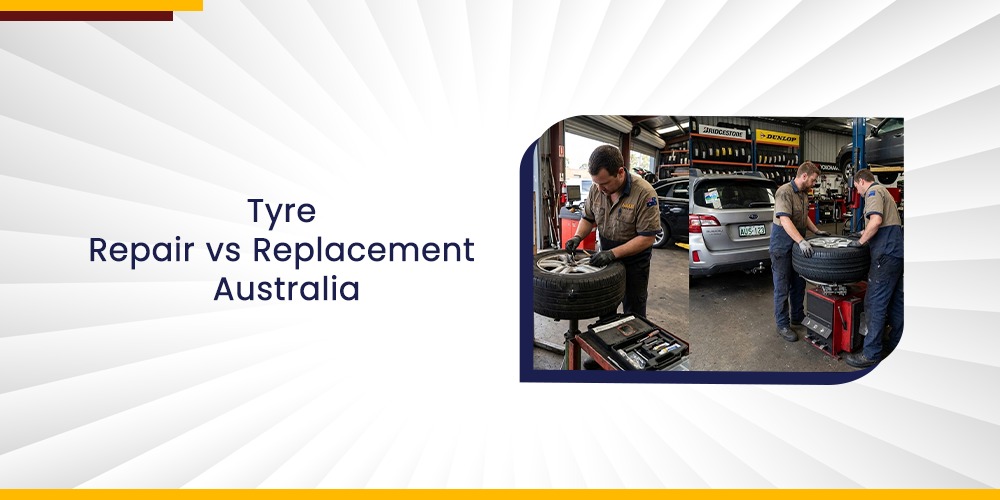
Tyre damage is one of the most common
reasons drivers visit a tyre shop. Nails, screws, road debris, and surface
damage can occur without warning and may not always be immediately visible. In
many cases, drivers are unsure whether a damaged tyre can be repaired or
whether replacement is required.
In Australia, tyre repair decisions depend
on damage location, damage size, tyre condition, and safety standards. This
blog explains when a tyre can be repaired, when replacement is required, and
how Australian driving conditions influence these outcomes.
Why Correct Tyre Damage Assessment
Matters
Tyres are designed to contain air pressure
while supporting vehicle load and braking forces. Damage that compromises tyre
structure or sealing capability cannot be corrected through repair without
increasing safety risk.
Incorrect repair decisions may result in:
- Air pressure loss during driving
- Reduced braking capability
- Structural failure under load
Assessing tyre damage correctly helps
maintain predictable vehicle behaviour and prevents secondary issues such as
uneven wear or alignment stress.
Damage assessment forms part of routine tyre services carried out during inspection and repair checks.
Common Causes of Tyre Damage in
Australia
Australian roads expose tyres to a range of
damage risks depending on location and usage. Common causes include:
- Nails or screws on construction and industrial roads
- Sharp debris near road shoulders
- Potholes and uneven surfaces
- Kerb impact during parking
In suburban and industrial areas such as
Noble Park, Sunshine West, and Lynbrook, tyres frequently encounter debris that
can penetrate the tread surface without immediate air loss.
Puncture Location and Why It Matters
The location of damage is one of the most
important factors in determining whether a tyre can be repaired.
Tyre tread areas are designed to withstand
contact and can often be repaired if damage is limited. Sidewalls, however,
flex continuously during driving and cannot be safely repaired once damaged.
General guidelines include:
- Damage within the central tread area may be repairable
- Damage near the shoulder may limit repair suitability
- Sidewall damage requires replacement
Tyre inspection and damage assessment are
included during tyre services at Evertyres locations.
Size of the Puncture
The size of the puncture affects whether a
repair can maintain an air-tight seal. Small punctures caused by nails or
screws are more likely to be repairable if detected early.
Larger holes or elongated damage paths
often indicate internal structural damage. In these cases, replacement is
required.
During inspection, technicians assess:
- Entry point size
- Internal damage path
- Air retention capability
These checks are part of standard tyre
inspection through Evertyres services.
Tyre Condition and Wear Level
Even when damage appears repairable, tyre
condition must be considered. Tyres with low tread depth or uneven wear may not
benefit from repair.
Repair may not be suitable if:
- Tread depth is close to legal limits
- Uneven wear patterns are present
- Structural ageing is evident
In such cases, replacement may provide
better handling consistency and prevent repeat issues.
Tyre condition checks are performed during
inspection at Evertyres stores.
Internal Damage and Air Loss
Some punctures cause internal damage that
is not visible from the outside. Driving on a tyre after pressure loss can
damage internal components even if the puncture itself is small.
Signs of internal damage include:
- Heat buildup
- Sidewall deformation
- Irregular vibration
Tyres that have been driven at low pressure
often require replacement regardless of puncture location.
Internal inspection forms part of tyre
assessment through Evertyres services.
Temporary Fixes vs Proper Repairs
Temporary fixes such as sealants or
external plugs may restore air pressure temporarily but do not address internal
damage. These methods are not considered permanent repairs.
Proper tyre repair requires internal
inspection and sealing to ensure air retention and structural integrity.
Temporary fixes should only be used to reach a service location.
Drivers experiencing pressure loss should
arrange inspection at an Evertyres store as soon as possible.
When Replacement Is Required
Replacement is required when damage
compromises tyre safety or performance. Common replacement scenarios include:
- Sidewall punctures or cuts
- Large tread punctures
- Structural damage from driving on a flat tyre
- Excessive tread wear
- Multiple punctures in close proximity
Replacement guidance is provided during
tyre inspection and fitting at Evertyres stores.
Repair vs Replacement Cost
Considerations
Drivers often compare repair cost against
replacement cost. While repair may appear cost-effective, replacing a tyre that
is near the end of its service life may prevent repeat visits and uneven wear.
Cost considerations include:
- Remaining tread depth
- Age of the tyre
- Wear consistency across the axle
Discussing these factors during inspection
helps determine the most practical option.
Replacing Tyres in Pairs
When replacement is required, tyres should
be replaced in pairs on the same axle to maintain balanced handling and
braking.
Replacing a single tyre on an axle with
uneven wear may result in traction differences. Replacement recommendations are
provided during tyre fitting at Evertyres stores.
Online Research Before Visiting a Store
Drivers often search online after noticing
tyre damage. Reviewing tyre availability before visiting a store helps reduce
decision time.
Evertyres provides online tools that allow
drivers to:
- Review tyre options through the inventory
- Compare available sizes using the shop
- Locate nearby service locations under stores
Questions related to tyre repair or
replacement can be addressed through contact.
How Early Inspection Prevents Larger
Issues
Early inspection after detecting a puncture
reduces the risk of internal damage and limits the need for replacement.
Delaying inspection can allow air loss to continue unnoticed, increasing
structural stress.
Drivers who arrange inspection promptly are
more likely to have repair options available.
Conclusion
Whether a tyre can be repaired or must be
replaced depends on damage location, size, internal condition, and overall tyre
wear. Australian driving conditions introduce debris and surface risks that
make regular inspection important.
Drivers who base repair or replacement decisions on inspection results rather than appearance alone maintain safer vehicle operation and reduce unexpected tyre failure